Wine and beverage transport from France, Italy, Spain and Portugal
Wine and other alcoholic drinks are excise goods, so movements between EU countries must be covered by an electronic document in the EMCS system – either an e-AD under duty suspension or a simplified document for duty-paid goods. The consignor issues the document and the consignee confirms receipt. We arrange a suitable vehicle, temperature-controlled in summer, and advise on what must be ready before collection.
Why wine is a special case
In the EU, wine, beer and spirits are excise goods. Duty is due in the country where the goods are released for consumption, and when they move between countries they must be accompanied by an electronic document in the EMCS system. Soft drinks such as mineral water and juice travel as ordinary goods with just an invoice and a CMR consignment note.
What documents does wine need?
| Situation | Document | Who handles it |
|---|---|---|
| wine not yet duty-paid (duty suspension) | electronic administrative document (e-AD) in EMCS | issued by an authorised warehousekeeper or registered consignor; receipt confirmed by an authorised warehousekeeper or registered consignee |
| wine already duty-paid in the country of dispatch, supplied for business purposes | simplified electronic administrative document (e-SAD) in EMCS | certified consignor and certified consignee; duty paid in the country of destination |
In both cases the document must exist before the truck departs. The consignment receives a reference code (ARC), which the driver carries and which we also pass to the consignee. After unloading, the consignee confirms receipt in the system, closing the movement. Neither the forwarder nor the haulier issues excise documents – that is the responsibility of the consignor and the consignee. For spirits, the consignee in the Czech Republic also has obligations relating to tax stamps.
If you are unsure which procedure applies to your delivery, check with your supplier and with the customs office responsible for excise duty. We are happy to tell you exactly what we need to know for the collection.
Temperature: heat and frost both harm wine
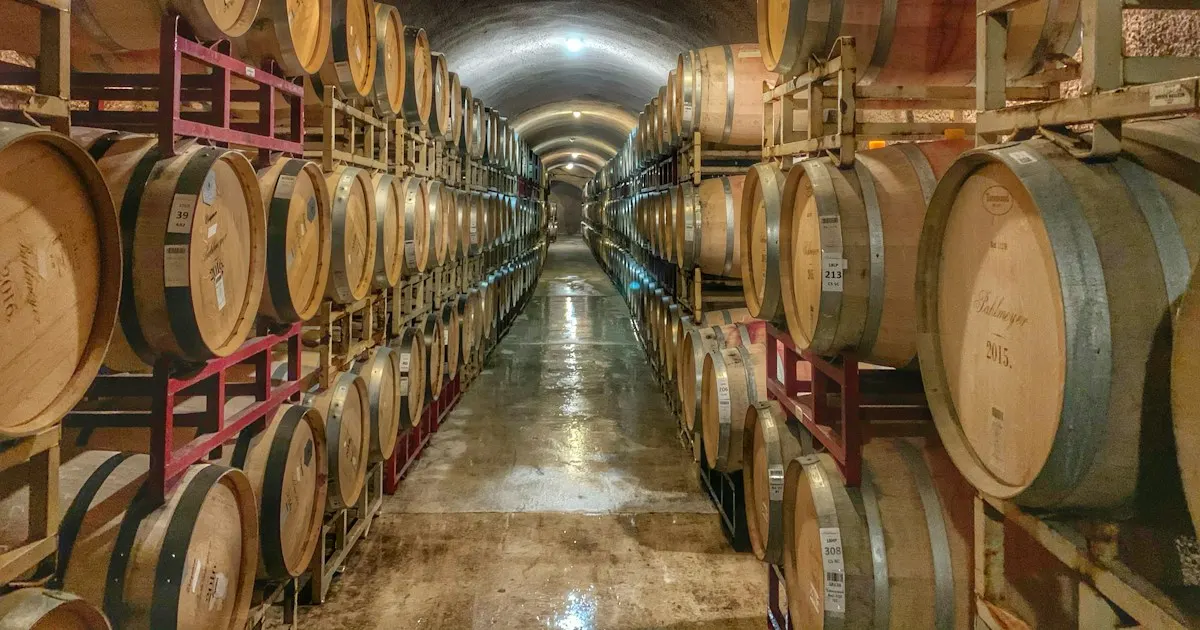
In summer, a standard curtainsider in southern Europe easily reaches temperatures that damage wine permanently. In winter, frost on the route over the Alps or across central Europe can push out corks or crack bottles. For quality wine we therefore recommend a vehicle with a cooling and heating unit in both summer and winter, set according to the consignor’s instructions. We record the temperature in the order and on the CMR.
How to pack wine so it arrives intact
- Cartons with dividers – bottles must not touch.
- Stable pallets – even layers of cartons, stretch-wrapped, with corner boards.
- No double-stacking – do not stack bottle pallets unless they are designed for it.
- Weight per pallet – drinks are heavy; give the actual weight so the truck is not overloaded.
- Labelling – “fragile” and “this way up” arrows on every pallet.
Where we collect wine
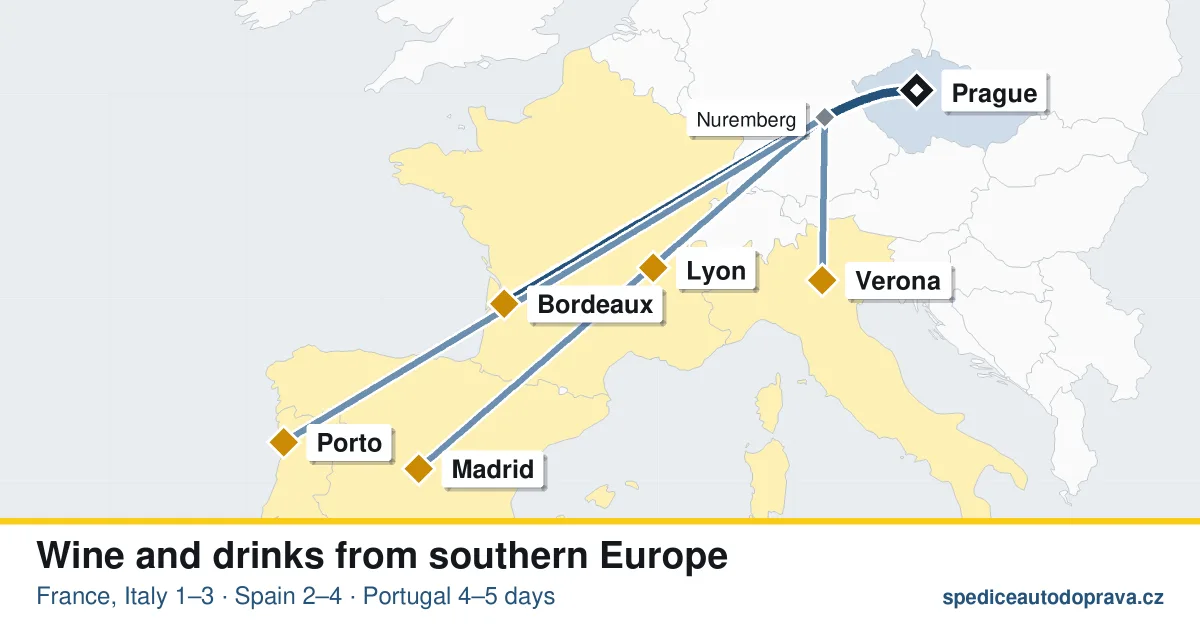
We collect from wineries, cooperatives and distributors’ warehouses – in France, for example, in Bordeaux, Burgundy or the Rhône Valley; in Italy in Piedmont, Veneto and Tuscany; in Spain in Rioja and La Mancha; in Portugal in the Douro Valley and Porto. Wine from several producers in one region can travel in a single truck. A full load takes roughly 1–3 days from Italy and France, 2–4 days from Spain and 4–5 days from Portugal; groupage is slower.
We often carry shelf-stable food alongside wine – see olive oil, cheese and ham transport. Get an indicative price in the calculator.