Fruit and vegetable transport from Spain in refrigerated trucks
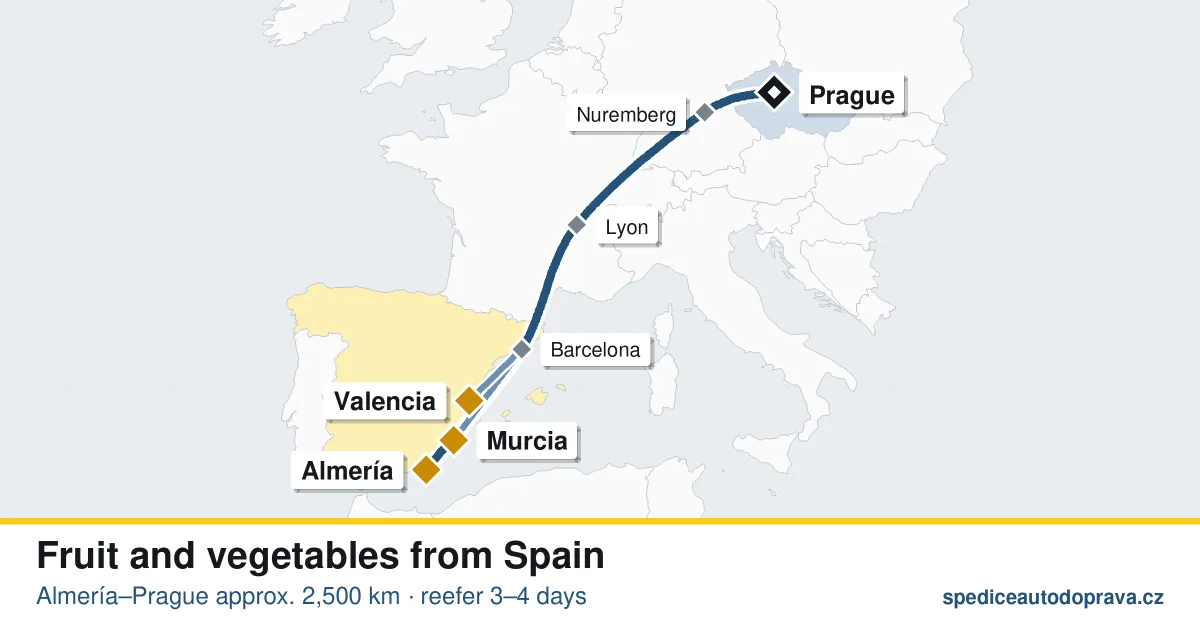
Fresh fruit and vegetables from Spain travel to the Czech Republic in a refrigerated trailer (reefer) that holds the temperature set for the produce throughout the journey. A full load from Almería, Murcia or Valencia takes roughly 3–4 days. We source the reefer from our contracted carriers, agree collection with the packhouse and monitor both temperature and delivery time.
Where in Spain fruit and vegetables come from
Most Spanish vegetables destined for central Europe are grown in the south-east of the country. Each area has a slightly different product range and therefore different temperature needs.
- Almería – vast greenhouse production: tomatoes, peppers, cucumbers, courgettes, aubergines and melons.
- Murcia – lettuce, broccoli and other field vegetables, plus lemons.
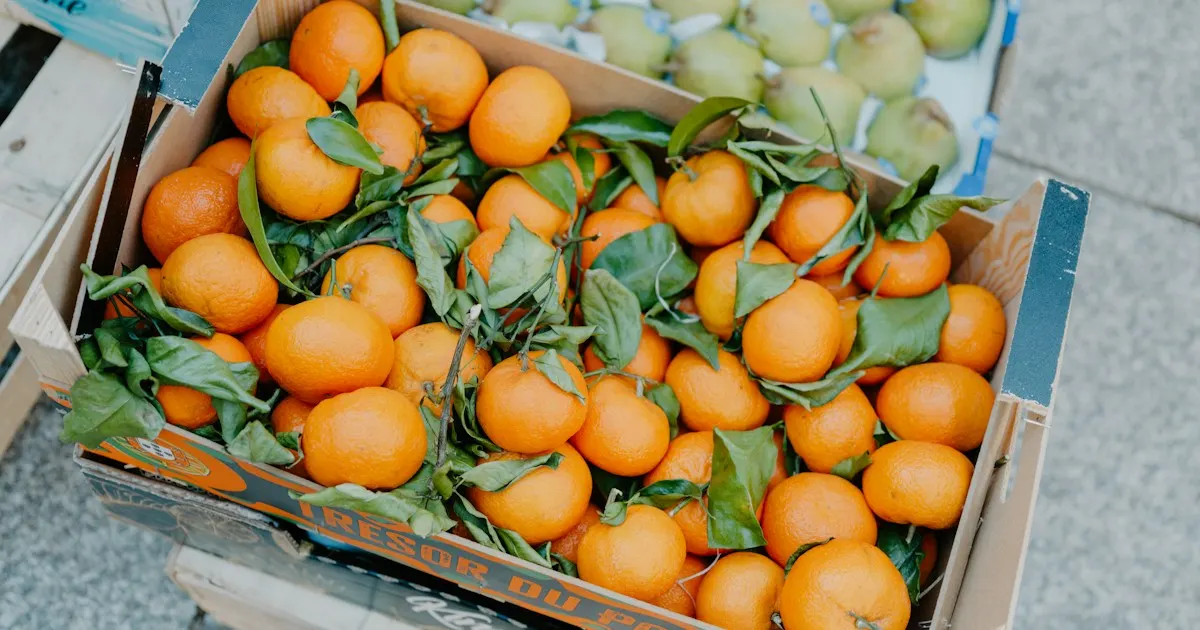
- Valencia – citrus fruit, above all oranges and mandarins.
Almería to Prague is about 2,500 km, Valencia to Prague around 2,100 km. We usually collect from packhouses and growers’ cooperatives with their own loading docks and fixed time slots.
Which temperature for which produce?
The temperature is set by the shipper or the consignee and is written into the transport order and the CMR consignment note. Typical ranges used in practice:
| Produce | Indicative temperature | Note |
|---|---|---|
| lettuce, broccoli, leafy greens | 0–2 °C | wilts quickly, needs low temperature |
| oranges, mandarins | roughly 4–8 °C | depends on variety and ripeness |
| lemons | roughly 10–13 °C | prone to chilling injury if too cold |
| tomatoes, peppers, cucumbers, courgettes, aubergines | roughly 8–12 °C | chill-sensitive, must not be over-cooled |
| melons | roughly 10–15 °C | give off ethylene, keep away from leafy greens |
A mixed load is always a compromise. Tomatoes and melons release ethylene, which makes more delicate produce ripen and wilt faster. If you are shipping several kinds together, tell us in advance – we will suggest how to split the load or arrange a multi-compartment reefer.
Why speed matters
Every day on the road eats into the time the produce can be sold. For fresh goods we therefore plan collection so that the truck leaves straight after loading rather than waiting for other consignments. On request we arrange a double-crewed vehicle that can run almost non-stop; this shortens transit but costs more. It also helps that fresh food is exempt from Germany’s Sunday driving ban for lorries.
When is the season?
The main season for greenhouse vegetables from Almería and citrus from Valencia runs from autumn to spring, when central Europe has little produce of its own. In those months reefers on the Spain lane are in high demand, so we recommend booking ahead – ideally a few days before collection. In summer there are fewer fresh vegetables from Spain and melons dominate.
How to prepare the consignment
- Pre-cool the produce – a reefer maintains temperature but cannot quickly bring warm goods down.
- State the temperature – in the order and the CMR, ideally specifying continuous cooling mode.
- Stabilise the pallets – corner boards and strapping stop cartons shifting under braking.
- Leave room for airflow – do not push pallets tight against the walls or ceiling.
- Check the goods on delivery – note any reservations on the CMR and ask for a temperature recorder printout.
What about smaller quantities?
Chilled groupage exists for single pallets of fresh produce, but it is less common than standard groupage. It is worth using if the produce can cope with a day or two longer in transit. Larger volumes go as a part load or a full reefer. For shelf-stable food such as olive oil or cheese there is a separate page on food transport. Get an indicative price for a reefer in the calculator.