Freight from Bulgaria to the Czech Republic: via Serbia or via Romania
A truck from Bulgaria to the Czech Republic takes either the shortest route through Serbia, where EU goods need a transit document, or the route through Romania and Hungary, where they never leave the EU. Sofia to Prague is about 1,450 km and a full load takes 3–4 days. The usual cargo is clothing, cosmetics, wine, food and electrical components. We pick the route to suit the goods and the collection point; the calculator shows an indicative price.
Two ways from Bulgaria to the Czech Republic
Heading towards central Europe, Romania is the only EU country Bulgaria shares a land border with; Greece lies the other way. A truck therefore chooses between two corridors:
| Via Serbia | Via Romania | |
|---|---|---|
| Route | Sofia – Kalotina – Niš – Belgrade – Horgoš/Röszke – Budapest | Vidin–Calafat or Ruse–Giurgiu – Timișoara/Arad – Nădlac – Budapest |
| Customs status | leaves the EU, goods travel under T2 transit | stays inside the EU, invoice and CMR are enough |
| Borders | two EU external borders with customs and passport checks | Schengen internal borders with no systematic checks |
| Roads | mostly motorway through Serbia | partly ordinary roads, Danube crossed by bridge |
| Best for | Sofia, Plovdiv and the south-west | Ruse, Varna, the north and goods you want kept within the EU |
From Sofia the two routes are similar in distance, but the Serbian one is usually quicker thanks to its motorways – as long as the borders are not congested. From Ruse or Varna it often makes more sense to run via Bucharest and the Romanian motorways.
What transit through Serbia involves
Serbia is neither in the EU nor in the customs union. When EU goods leave the Union’s customs territory and re-enter it a few hundred kilometres later, they must travel under Union transit to keep their EU status and avoid duty on arrival in Hungary. In practice:
- A customs agent in Bulgaria opens a T2 transit declaration in NCTS and provides the guarantee.
- The driver carries the transit accompanying document with its MRN, the invoice and the CMR.
- At Kalotina and Röszke the consignment is recorded at the offices of transit; Serbia clears it as transit.
- In the Czech Republic the transit is discharged at the office of destination or by an authorised consignee before unloading.
We arrange the transit document through a customs agent and show its cost in our quote. An undischarged transit would cause trouble with the guarantee, so after delivery we check that it has been closed properly.
When the Romanian route is the better choice
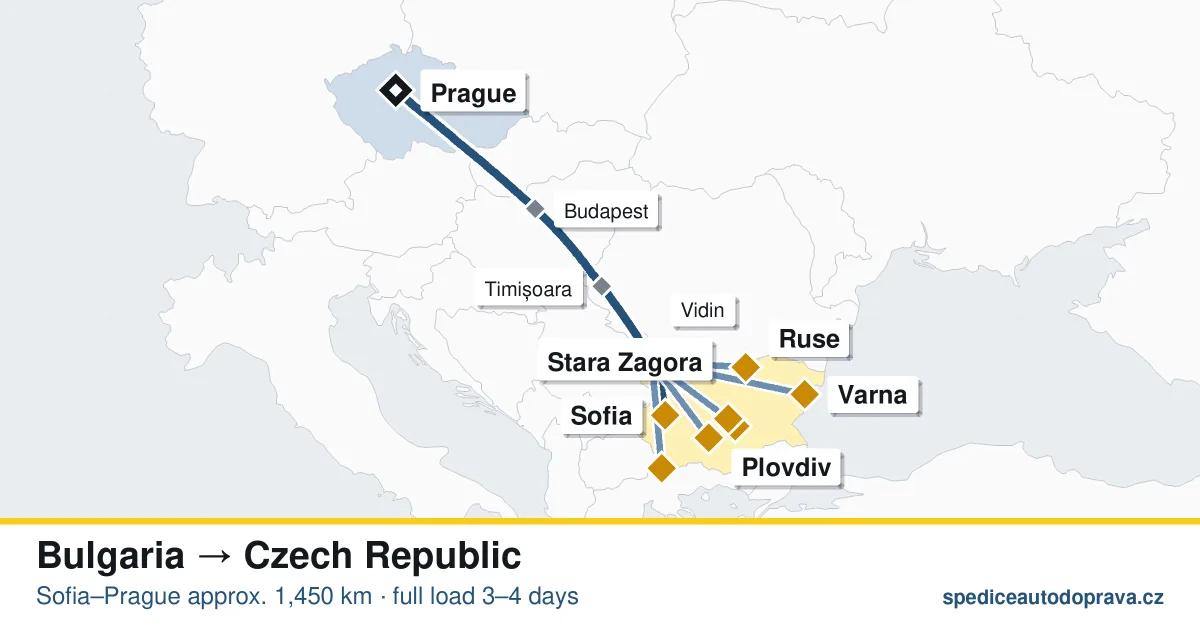
We recommend going via Romania for small consignments that customs formalities would make disproportionately expensive, for collections in northern and eastern Bulgaria, and for excise goods you want to move as simply as possible under an e-AD. The Danube is crossed on the Ruse–Giurgiu or Vidin–Calafat bridge. Groupage services from Bulgaria use one route or the other depending on the operator, and we always tell you which.
Bulgaria’s industrial centres and what they ship
Bulgarian industry is clustered in Sofia, on the Thracian Plain around Plovdiv and Stara Zagora, along the Danube and on the Black Sea coast. Where the goods are collected often also settles which of the two routes the truck takes.
| City | Industry | What we typically carry from there |
|---|---|---|
| Sofia | electrical engineering, pharmaceuticals, food | cables and electrical components, medicines, food |
| Plovdiv | industrial zones with electrical and automotive plants, food, textiles | electrical goods, parts for carmakers, tinned food, clothing |
| Stara Zagora | engineering, hydraulics, car parts, food | castings and hydraulic components, automotive seals, beer, poultry |
| Kazanlak | hydraulics, rose oil and cosmetics | hydraulic parts, rose oil, cosmetics |
| Ruse | engineering, car parts, chemicals, Danube port | car parts, machine components, chemical products |
| Varna and Devnya | chemical industry, seaport | soda ash and other chemicals, goods landed at the port |
| Petrich and Sandanski | garment making for European brands | clothing, boxed or on hangers |
Clothing from the south-west and the Plovdiv area is covered on our textile and footwear transport page. Cosmetics from the Rose Valley near Kazanlak cope badly with both frost and heat. Wine from the Thracian Plain and the Danube region moves under an e-AD (see wine transport), while cheese, honey, preserved vegetables and sunflower oil go on a curtainsider or in a reefer depending on the product (see food transport).
Tolls on Bulgarian roads
Vehicles over 3.5 tonnes pay a distance-based toll in Bulgaria, while lighter ones use an electronic vignette. After that comes either the Serbian motorway toll or the Romanian charges including the Danube bridge toll, and finally Hungary’s HU-GO. The carrier covers all of these within the freight price.
Schengen yes, but customs checks remain on the Serbian border
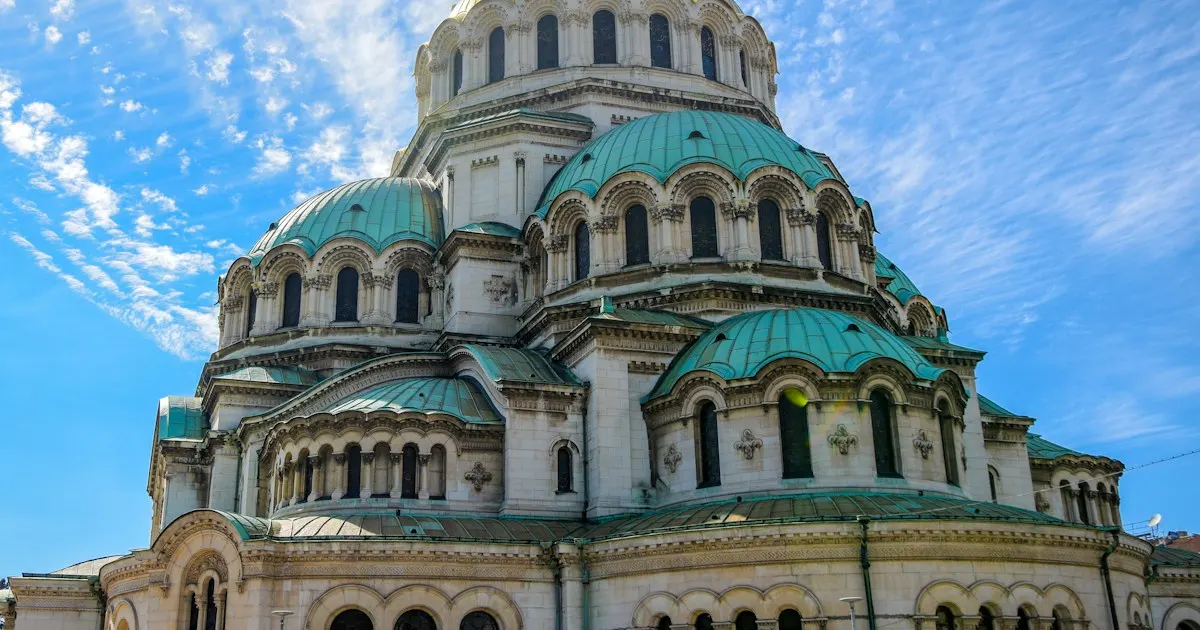
Bulgaria has been a full Schengen member since 1 January 2025, so systematic checks on the Romanian border have ended. The border with Serbia, however, remains an external EU and Schengen border, and lorry queues at Kalotina or Röszke can last for hours. For goods with a fixed delivery slot we therefore choose the route according to the current situation. Read more on freight from Romania, freight from Greece and the EU overview, or get an indicative price in the calculator.