Food transport: olive oil, tinned goods, cheese and ham
Shelf-stable food from southern Europe travels either in a standard or insulated (thermo) vehicle or in a refrigerated one – what decides is the storage temperature the producer gives on the packaging. Olive oil and tinned goods only need protecting from frost and heat, cheese and cured ham have their own recommended ranges, and pre-packed slices must be chilled. We arrange a clean vehicle at the right temperature and can collect from several suppliers in one run.
Insulated or refrigerated? It depends on the goods
An insulated (thermo) vehicle has an insulated body that cushions changes in outside temperature. A refrigerated vehicle (reefer) also has a unit that holds a set temperature and can heat as well as cool in winter. An insulated vehicle without a unit is cheaper and makes sense where it is enough to dampen temperature swings. The table shows which one fits:
| Goods | Typical vehicle | Why |
|---|---|---|
| olive oil in bottles and tins | curtainsider, insulated in winter | in the cold, oil thickens and turns cloudy; it clears when warmed, but on the shelf it looks like a defect |
| tinned goods, jars, pasta, rice | curtainsider, insulated in winter | jars containing liquid can freeze and crack |
| aged hard cheese (Manchego, Parmigiano Reggiano, Grana Padano) | reefer as instructed by the producer | temperature affects ripening and rind |
| whole cured hams (jamón, prosciutto) | insulated or reefer, per the producer | heat makes fat sweat and lowers quality |
| pre-packed slices, fresh cheese, mozzarella | reefer | short shelf life, unbroken cold chain required |
In summer even “shelf-stable” products containing oil or chocolate can suffer in the heat. If in doubt, send us the storage temperature from the packaging and we will choose the vehicle accordingly.
Where we collect food
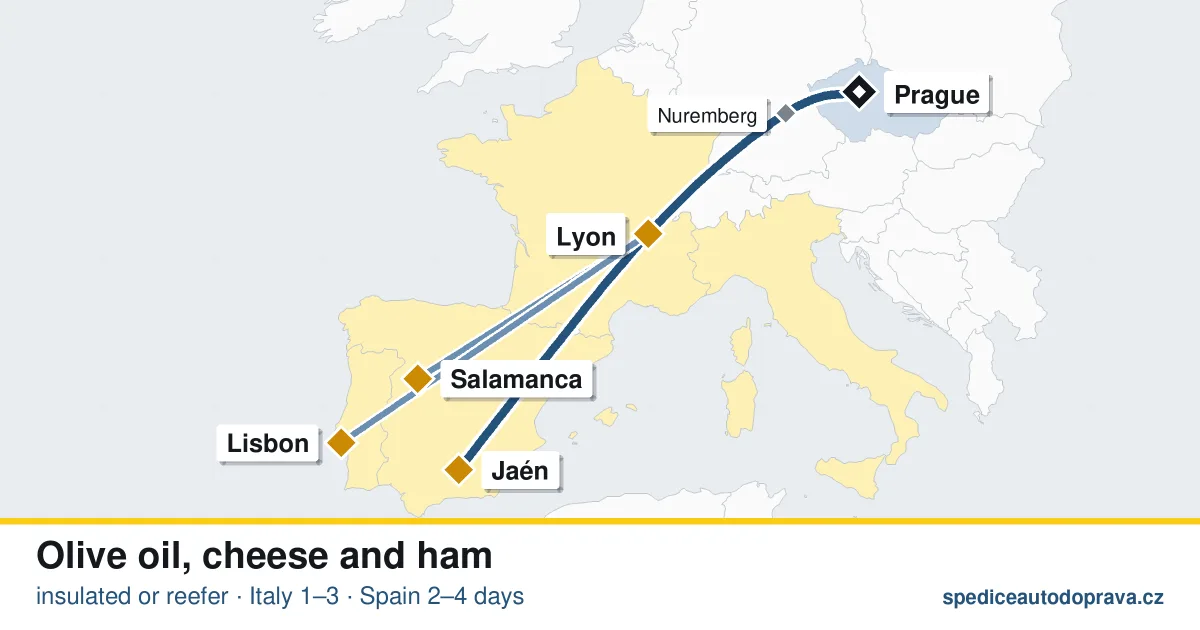
- Spain – olive oil from Andalusia, especially Jaén province; jamón from Guijuelo, Jabugo or Teruel; Manchego cheese from La Mancha.
- Italy – Parmigiano Reggiano and prosciutto from Emilia-Romagna, Grana Padano from the Po Valley, pasta and tomato products.
- France – cheese, pâtés, preserves and delicatessen products.
- Portugal – olive oil and tinned fish.
Vehicle hygiene
Food must travel in a clean, dry, odour-free vehicle that has not previously carried chemicals, fertilisers or other goods that could contaminate it. We pass this requirement to the carrier in the order. At collection the shipper may inspect the vehicle and reject an unsuitable one, in which case we arrange a replacement. Food cartons should be stretch-wrapped on pallets to keep out dust and moisture.
How much and which transport mode
Oil and tinned goods are heavy, so a full truck often reaches its weight limit before the deck is full – just as with drinks. Smaller deliveries for shops and restaurants can travel as insulated groupage; chilled groupage exists but is less common, and the date needs to be checked. For larger orders we use a part or full load and can collect in turn from several producers in one region.
What the consignee has to sort out
Food from EU countries moves freely, with no customs duty and no veterinary border checks. The consignee in the Czech Republic does, however, have its own obligations – such as Czech-language labelling for consumers and, for food of animal origin, obligations towards the State Veterinary Administration (SVS). Check them with the supervisory authorities (SZPI, SVS); they do not affect the transport itself. If you are shipping food together with wine, see also our page on wine and beverage transport, as wine needs its own excise documents.
Fresh fruit and vegetables follow different rules – see fruit and vegetable transport from Spain. Get an indicative price for food in the calculator.